


19 Feb HR LAW NEWSLETTER – JANUARY 2026


In the January 2026 HR Law Newsletter, we welcome you into the New Year with our new look. We will discuss what employers can expect this year, as well as key dates for when updated/new legislation comes into force. We hope you enjoy our first newsletter of 2026.

The FWC has announced upcoming changes in the field of Employment Law and Industrial Relations, including:
•
the results of the independent review of the Comcare compensation scheme and progress on banning non-compete clauses for lower-income earners (from 2027);
•
review of the National Employment Standards (“NES”) with a focus on whether NES still meets the needs of workers, employers and the economy. Key areas that unions are advocating for include increasing annual leave to 25 days and AI driven job loss/redundancy including the removal of the small business redundancy exemptions;
•
the FWC’s Revised Management and Provision for General Protections Claims continues to progress in 2026. Stage 2 will involve a review of conference processes under s.368 of the Fair Work Act 2009 (Cth) (“FW Act”) and Stage 3 will focus on updating information and education materials. Once Stage 3 is complete, the FWC will commence reviews of General Protections applications not involving dismissal under s.372 of the FW Act and Unfair Dismissal applications under s.394 of the FW Act.
•
Fair Work Amendment (Paid Family and Domestic Violence Leave Act 2022 (Cth)) is under further review, following its assessment in 2024;
•
FWC full bench has paused its review of the Right to Disconnect provisions due to limited case law; and
•
the Senate will be undertaking an inquiry into the Greens’ “right to work from home” Bill and a FWC three-day hearing in February 2026 on adding a working-from-home clause to the Clerks – Private Sector Award 2020 [MA000002].
The following decisions are expected to be handed down in 2026:
•
the Federal Court’s review of BHP Coal’s same-job, same-pay orders for Bowen Basin mine, with Orica to file High Court submissions by 3 February on black coal industry long service leave (LSL) eligibility. BHP Coal’s reply is due in late February; and
•
the Woolworths Class Actions involving underpayment of team members in South Australia and losses experienced by shareholders due to non-disclosureon the magnitude of employee’s underpayment claims, which falsely assured shareholders of their financial position.
Specific to Victoria:
•
an update on the implementation of recommendations from the Inquiry into Workplace Surveillance.
Specific to New South Wales:
•
Work Health and Safety Amendment (Digital Work Systems) Bill 2025, if passed, will introduce a duty on employers to ensure that the health and safety of their employees is not put at risk by the allocation of work from a digital work system, which does not take into account the individual employee’s circumstances.
•
Workers Compensation Legislation Amendment (Reform and Modernisation) Bill 2025, if passed, there will be an eighteen (18) month freeze on premiums for businesses and whole person impairment for psychological injuries threshold will increase from 15% to 25% and then to 28% by 2029. If employee’s suffer psychological impairment and it leaves them less than 25% impaired, then they will receive 2 years of support plus an additional transitional year of support.
HR Law will keep you updated on these amendments and decisions.

In September 2025, there were 973,000 multiple job holders. That’s 6.5% of employed people having multiple jobs.
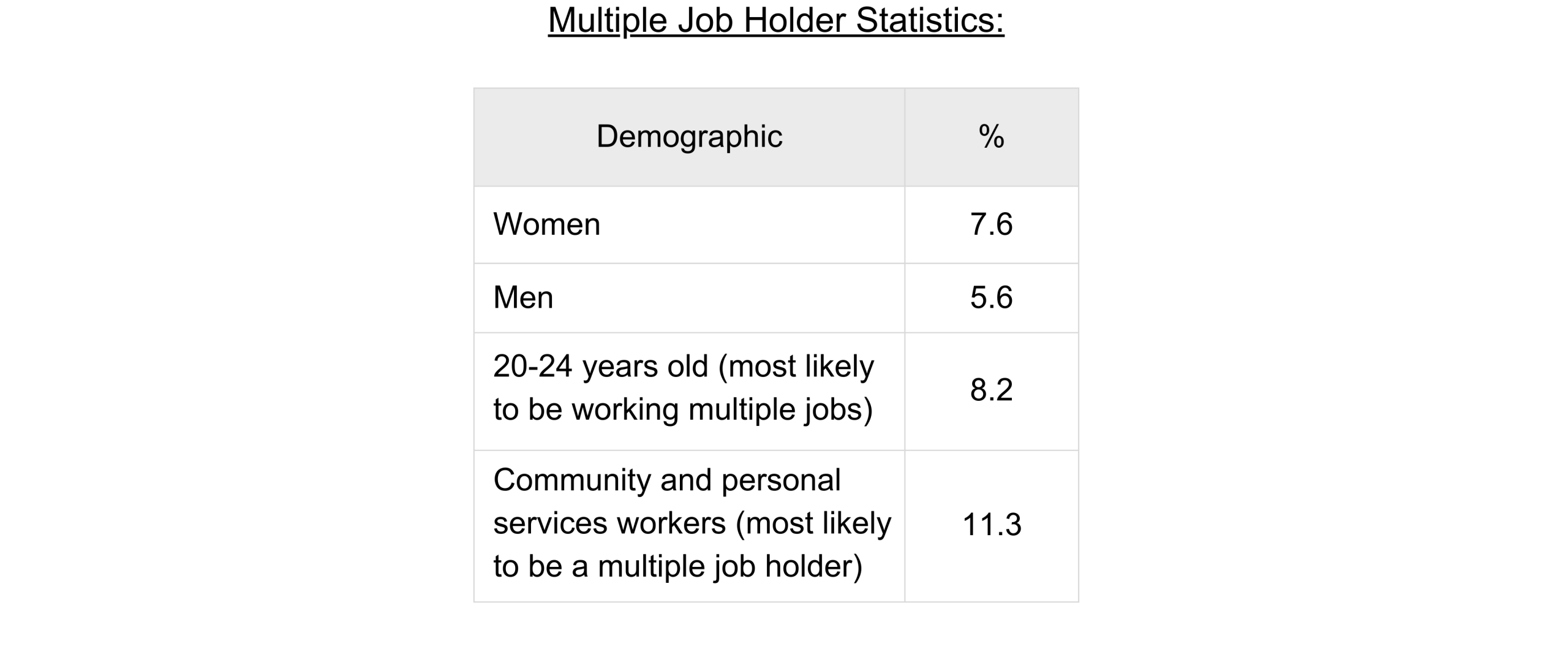
If you would like to read more on this, please click the below link: https://www.abs.gov.au/statistics/labour/jobs/multiple-job-holders/sep-2025

Pay Day Super – 1 July 2026
Employers will be required to pay superannuation at the same time as paying employees’ wages from 1 July 2026.
The Treasury Laws Amendment (Payday Superannuation) Act 2025 (Cth) will mandate that employers must pay their employee’s superannuation contributions within seven (7) calendar days of paying the relevant wages. This is to ensure that employees receive their entitled superannuation in a timely manner and reduces the risk of delayed or unpaid superannuation guarantee contributions.
The Superannuation Guarantee Charge Amendment Act 2025 (Cth) has been redesigned to:
“deliver significant consequences for employers that repeatedly fail to pay their workers or let super go unpaid for long periods of time, and it will make sure that workers are accurately compensated for lost earnings if their employer is late in paying their contributions”.
This means employers will be penalised with a superannuation guarantee charge when Superfunds do not receive payment within 7 days of the relevant wages being paid to the employee. Please note the charge is now tax deductable.
It is also noted that as part of these reforms, the Small Business Superannuation Clearing House will no longer be available from 1 July 2026.
NDAs on Workplace Sexual Harassment in Victoria – 1 July 2026
The Restricting Non-disclosure Agreement (Sexual Harassment at Work) Act 2025 (Victoria) (“Act”) was passed in December 2025.
It provides for the following:
1.
A complainant can terminate their NDA relating to workplace sexual harassment 12 months after signing it to allow for disclosure of material information.
2.
A complainant is to give seven (7) days’ notice to their employer when terminating their NDA.
3.
An NDA can only be entered into if the complainant requests it.
4.
An employer cannot pressure a complainant into signing an NDA by proposing a higher or lower settlement amount with or without an NDA or suggesting that it will be hard to find a job without an NDA.
5.
An employer must provide the complainant with a “workplace non-disclosure agreement information statement” and a minimum 21-day review period before finalising an NDA. The review period can be waived or shortened by the complainant.
6.
An NDA must be written in plain language.
7.
The complainant must be provided with a copy of the signed NDA.
8.
The complainant will now be able to disclose information to a list of persons to whom a ‘permitted disclosure’ applies to, including medical or legal practitioners, mental health and wellbeing professionals, friends and family who agree to keep the information confidential, ministers of religion, Victoria Police, tax agents, Centrelink and tribunals (e.g., Fair Work Commission and Australian Human Rights Commission), without terminating their NDA.
9.
Non-disclosure terms in employment contracts relating to the prevention of disclosing material information about workplace sexual harassment are unenforceable.
10.
A complainant can issue a breach notice if their employer has failed to meet any preconditions stipulated above. The breach notice must contain the reason for it, advise the employer of their right to challenge and be in an approved form. The employer has 30 days to respond otherwise the NDA will no longer be legally binding. This is thought to reduce the burden on the complainant to issue court proceedings yet still allows the employer to respond and challenge the notice
The Act will apply to employers who have employees who are “usually” based in Victoria for work and will only cover NDAs relating to workplace sexual harassment.
Federal Government Paid Parental Leave – 1 July 2026
The Federal Government’s Paid Parental Leave Scheme (“Scheme”) has increased the period of the Scheme from 24 weeks to 26 weeks for children born or adopted from 1 July 2026. These changes will apply from 1 July 2026 onwards. We recommend employers review internal Parental Leave policies to determine if any changes are required in light of these coming changes. If you have any questions regarding these changes, please contact our lawyers who can assist you.
The content of this newsletter is intended to provide a general guide to the subject matter. Specialist legal advice should be sought about your specific circumstances.

Are you following our LinkedIn? For updates on new laws, cases and inquiries as they happen
follow us here: https://www.linkedin.com/company/hr-law/ .
No Comments